Why Eyeglasses Insurance Isn’t Always Worth It
We hear it all the time. “Do you take VSP or EyeMed?.”
Vision insurance has become so common that many people assume it’s the smartest (and cheapest) way to buy glasses.
But here’s the reality: eyeglasses insurance often doesn’t deliver the value people think it does.
Let’s break down why.
1. The Illusion of Savings
At first glance, vision insurance feels like a win. You pay a monthly premium, and in return, you get a “covered” pair of glasses each year.
But when you actually look at the numbers:
Annual premiums often total $150–$300+
Frame allowances are typically $120–$200
Lens coverage is often basic only
What you’re really getting is a discount program with restrictions, not true insurance.
In many cases, you could spend the same amount—or less—buying glasses outright, with far more flexibility.
2. Limited Frame Selection (and Why It Matters)
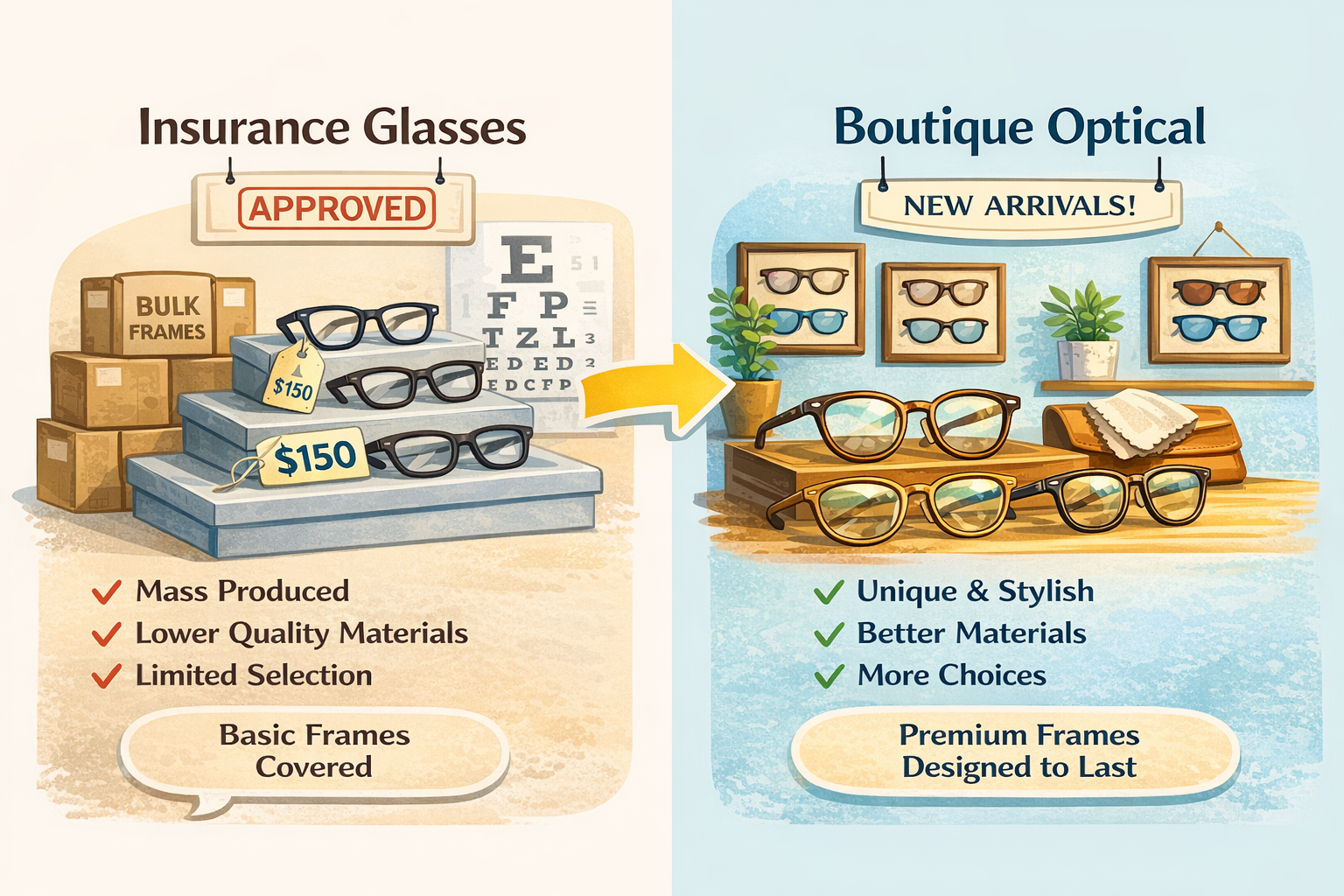
Most insurance plans push patients toward a restricted in-network of frames. These are often:
Mass-produced
Designed for high turnover
Built with lower-cost materials
You’ll notice a pattern: the frames that are “fully covered” tend to be the ones you’re least excited about.
Why? Because insurance companies negotiate pricing with large manufacturers—not independent designers focused on craftsmanship, fit, and longevity.
At a Eye Designs, the focus is different:
Unique, small-batch collections
Better materials (titanium, acetate, handcrafted finishes)
Frames that are designed to last—not just to meet a price point
3. The Truth About “Covered” Lenses
This is where things really matter—and where insurance often falls short.
Most plans cover only the most basic lenses, which means:
Standard plastic materials
Minimal or outdated coatings
Limited customization
But modern lenses are far more advanced than what insurance typically includes.
High-quality lenses can offer:
Sharper optics with digital surfacing
Reduced glare and reflections
Better durability and scratch resistance
Blue light management and UV protection
Customization based on how you actually use your eyes
Insurance plans often treat these upgrades as “extras”—but in reality, they’re what make glasses truly perform. At Eye Designs we consider these things essentials.
4. Built to Last vs. Built to Qualify
There’s a fundamental difference between products designed to meet insurance criteria and those designed for long-term performance.
Insurance-driven products are often:
Built to hit a price target
Replaced frequently
Less durable over time
Higher-quality eyewear is:
Crafted to last for years
More comfortable for daily wear
A better long-term investment
5. The Better Alternative: Invest in What You Wear Every Day
You wear your glasses all day, every day. They’re not just an accessory—they’re a tool you rely on constantly.
Instead of focusing on what’s “covered,” it’s worth asking:
Do I love how these feel?
Do I see as clearly as possible?
Will these hold up over time?
When you invest directly in quality eyewear, you’re not just buying glasses—you’re investing in comfort, clarity, and confidence.
Final Thoughts
Vision insurance can be helpful in certain situations—but when it comes to eyewear, it often prioritizes cost control over quality.
The result?
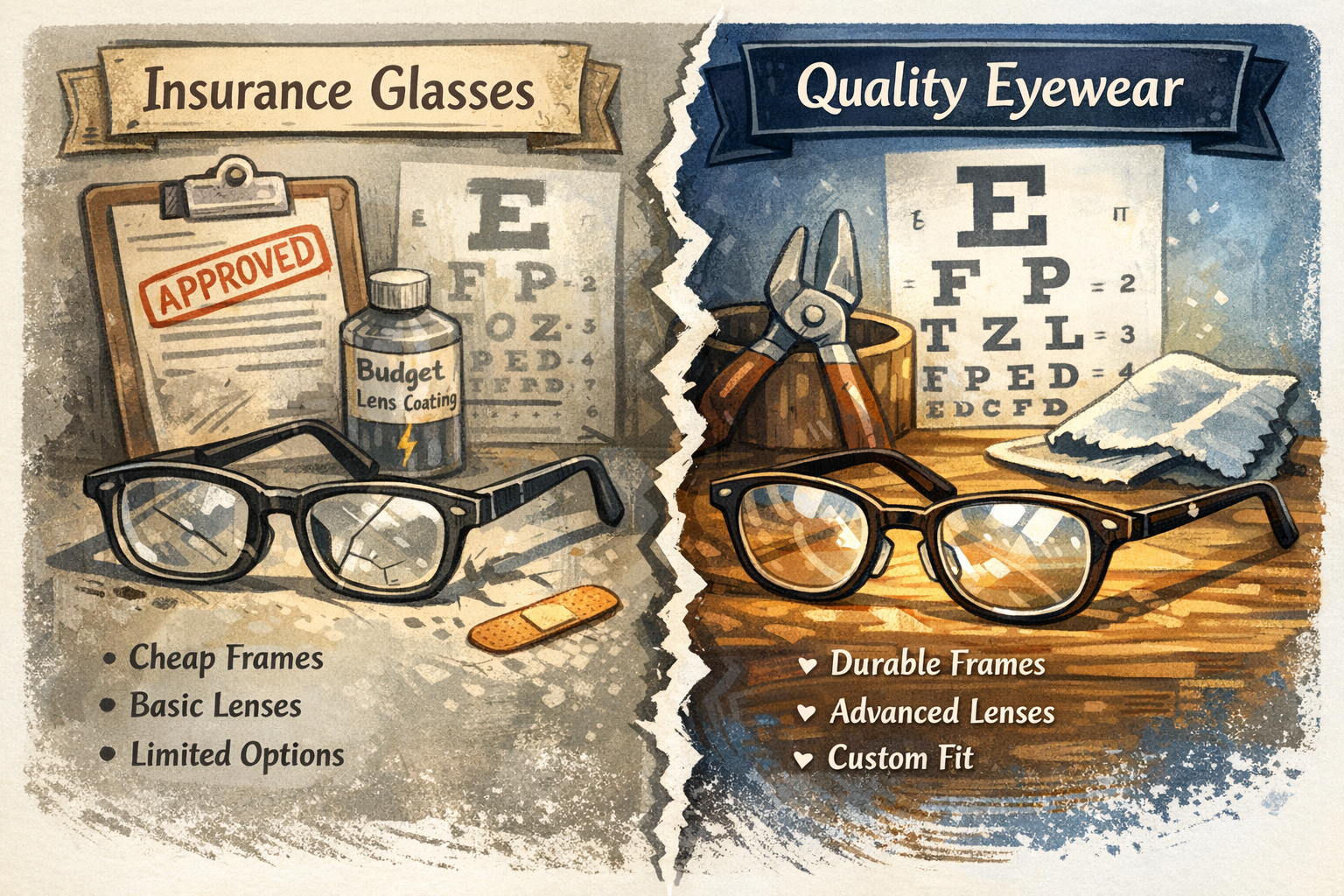
Lower-quality frames, basic lenses, and limited choices.
If you’ve ever walked away from an insurance purchase feeling underwhelmed, you’re not alone.
The good news is that there’s another option:
Thoughtfully selected frames
Lenses tailored to your life
A focus on quality over shortcuts
Because at the end of the day, the real question isn’t:
“What does my insurance cover?”
It’s:
“Do I love my glasses?”